In a world where skyscrapers seem to sprout like weeds, new building construction is the name of the game. Whether it’s a shiny office tower or a cozy apartment complex, the thrill of watching a structure rise from the ground can be as exhilarating as a rollercoaster ride—without the nausea. As cities expand and populations grow, the demand for innovative designs and sustainable practices is more important than ever.
Overview Of New Building Construction
New building construction represents a significant shift in urban infrastructure. Cities are witnessing a rise in projects that prioritize innovative designs and sustainability. Developers recognize the need for efficient use of space, particularly in densely populated areas. The emphasis on eco-friendly materials influences construction practices as well.
Innovative construction methods gain traction, such as modular building and 3D printing. These techniques reduce timeframes and lower costs while maintaining quality. Smart technology integration in new buildings enhances energy efficiency, optimizing resource usage. Sustainability experts recommend designs that meet LEED certification standards, promoting environmentally responsible practices.
In 2022, the U.S. construction market valued at approximately $1.5 trillion. Urban infill projects also take precedence, revitalizing underused areas and reducing urban sprawl. Multi-family housing developments cater to the growing demand for affordable living options. Cities depend on these constructions for housing solutions, addressing population growth challenges.
New building construction often faces zoning and regulatory hurdles. Navigating these can delay projects and increase costs. Collaboration between architects, engineers, and city planners fosters smoother progress. Stakeholders utilize advanced planning tools to visualize projects, ensuring alignment with community needs.
The future of new building construction hinges on adaptability and resilience. Trends indicate an increasing shift towards mixed-use developments, combining residential and commercial spaces. Community-friendly designs enhance livability while addressing city growth. As urbanization continues, effective construction practices will remain pivotal in shaping modern cities.
Key Trends In New Building Construction
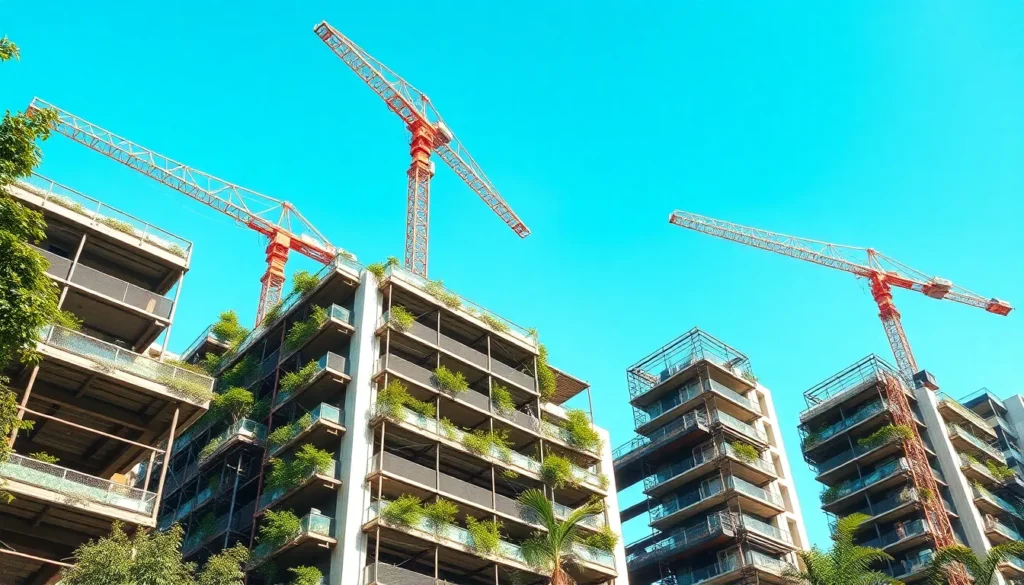
New building construction reflects significant advancements in design, technology, and sustainability. The emphasis on eco-friendly solutions and smart innovations reshapes urban landscapes.
Sustainable Practices
Sustainable practices remain a central theme in new building construction. Architects frequently utilize eco-friendly materials that minimize environmental impact. Favorable options include recycled steel, bamboo, and low-VOC paints. Energy-efficient designs also prioritize natural light and passive heating. LEED certification increasingly sets benchmarks for sustainable construction, ensuring buildings consume less energy. In 2022, approximately 40% of new buildings in the U.S. aimed for LEED certification. Waste reduction strategies such as recycling construction debris play a critical role in eco-conscious projects. Garden roofs and green walls enhance biodiversity while providing insulation.
Smart Technology Integration
Smart technology integration transforms the functionality of new constructions. Builders often install advanced energy management systems that optimize resource use. These systems facilitate real-time monitoring of energy consumption, reducing waste and costs. Automation enhances building security and comfort through features like smart locks and climate control. In 2022, about 30% of new buildings included smart home technologies, catering to the rising demand for connectivity. Sensors and IoT devices streamline maintenance and improve occupant experiences. Integration of renewable energy sources, such as solar panels, aligns with sustainability goals while supporting energy independence. Ultimately, embracing smart technologies positions new buildings at the forefront of modern urban living.
Challenges In New Building Construction
New building construction often encounters various challenges that complicate project completion. Navigating these obstacles requires strategic planning and collaboration.
Regulatory Hurdles
Zoning laws play a significant role in limiting project scope. New building projects must comply with local regulations that often vary, leading to delays. Obtaining permits can take time, impacting the overall timeline. Environmental regulations also influence construction methods and materials. Compliance with these regulations ensures projects align with sustainability goals, but can introduce additional complexity. Additionally, community input can lead to changes in project designs, further prolonging the process. Effective communication between stakeholders helps address these regulatory challenges efficiently.
Cost Management
Cost management represents a critical factor in new building construction. Project budgets may fluctuate due to material price changes and labor costs. Accurate forecasting of these expenses helps maintain budget integrity. Implementing cost-effective construction methods, such as modular building, can reduce waste and labor requirements. Financial overruns often stem from unexpected challenges, necessitating contingency funds. Engaging with experienced contractors and suppliers aids in achieving cost control. Long-term value assessment ensures that initial investments yield beneficial returns over time. Balancing quality and expense requires careful planning and informed decision-making.
Innovations Shaping New Building Construction
Innovations in new building construction are redefining the urban landscape. Emerging methods significantly enhance design and efficiency.
Prefabrication Techniques
Prefabrication techniques streamline the construction process. By manufacturing building components off-site, projects reduce construction time and labor costs. This approach allows builders to create modules in controlled environments, enhancing quality and minimizing waste. In 2022, approximately 20% of new constructions utilized prefabricated components, showcasing their growing popularity. Builders typically assemble these pre-made structures on-site, enabling quicker project completion without sacrificing quality.
Modular Construction
Modular construction simplifies project management through its efficient design. Structures consist of interconnecting modules, each constructed independently before assembly. This method significantly reduces build times, with many projects achieving completion in half the traditional timeframe. Approximately 25% of new U.S. buildings in 2022 incorporated modular designs, reflecting a shift towards quicker, more flexible construction. These designs also promote sustainability by using fewer resources and generating less waste, aligning with modern eco-friendly standards.
New building construction is shaping the future of urban environments. As cities evolve the emphasis on sustainability and innovative design is more crucial than ever. The integration of smart technology and eco-friendly materials not only enhances functionality but also promotes energy efficiency.
While challenges like zoning regulations and cost management persist collaboration among stakeholders is key to overcoming these hurdles. As the industry embraces advanced construction methods such as modular building and prefabrication the potential for transforming urban landscapes continues to grow. The future holds exciting possibilities for creating vibrant and sustainable communities that meet the needs of an expanding population.